Doug Harris and Raymond Bell spent more than a decade assembling voices, footage, memory and the missing pieces of Emmett Ashford’s life.
- JAMES FARR
- SEP 8, 2026
Doug Harris and Raymond Bell were already looking at the largely untold history of Black officials in professional sports when Emmett Ashford entered the picture.
They had been developing Off Sides, a documentary about pioneering football official Burl Toler. That work opened another door.
“When we looked at Emmett Ashford,” Bell said, “he blew us away.”
They had been interested in officials — not coaches or players, but the people empowered to make decisions inside professional sports. Then Ashford became the story. Neither filmmaker knew him. Ashford died in 1980.
That is the documentary problem underneath Called Up: Harris and Bell know how Ashford’s story ends. They do not know Ashford.
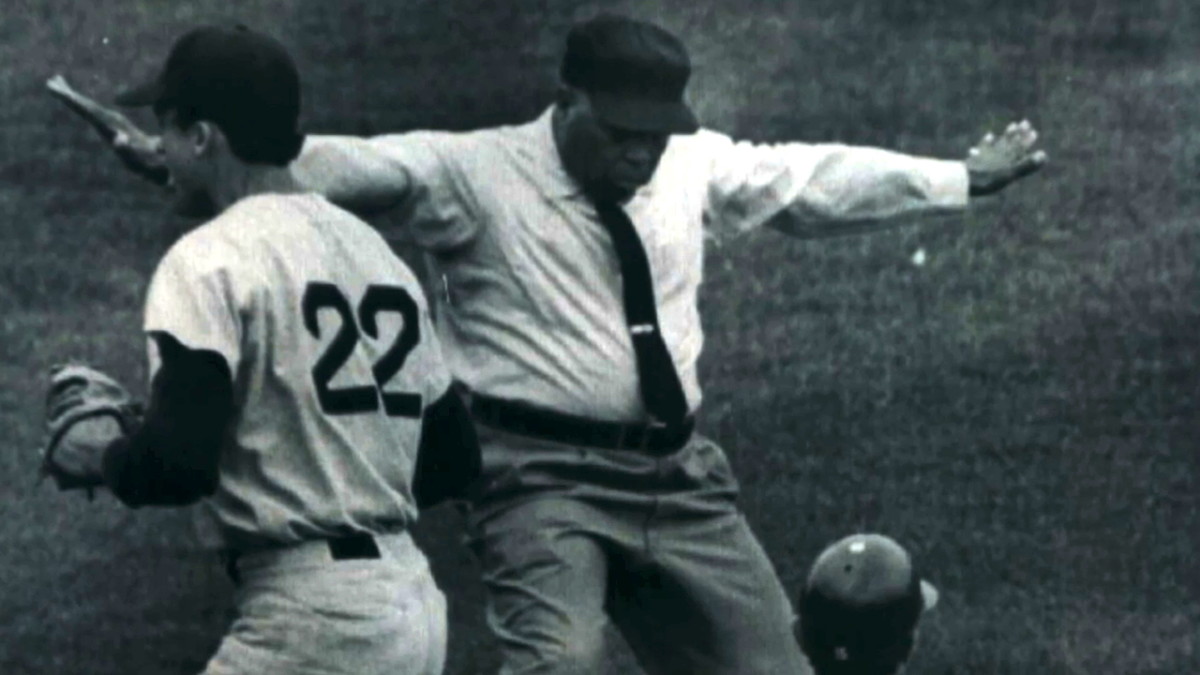
Emmett Ashford – The Man Inside the First
Any search engine can tell you he became the first Black umpire in Major League Baseball. It can give you dates, teams, promotions, retirement, death. That is chronology.
The filmmakers had to find the man inside it. They had to put a soul inside the first.
Bell remembers that Ashford’s name “just popped up all over the place.” Eventually, they contacted his daughter, Adrienne Bratton, and began the process of securing the family’s participation.
Their way toward Ashford came through family, photographs, newspapers, baseball footage, oral history and people who still carried some version of him.
Tommy Lasorda. Branch Rickey III. Maury Wills. Doug Harvey. Dick Enberg. Monte Moore. Ray Fosse. Rick Monday. Brad Pye Jr. Dave Newhouse. Tommie Hawkins. Bedford Palmer. Lorn Foster. David Zirin.
Players, umpires, broadcasters, writers, historians — different parts of baseball remembering the same man.
“As we started talking to people about Emmett Ashford,” Harris said, “they would recommend other people for us.”
One interview opened another door. Monte Moore led Harris to Hall of Fame umpire Doug Harvey. On another day, Harris and Bell split up because Dick Enberg and Harvey were available hundreds of miles apart.
“We had to split up,” Harris said. “But we got it done.”
For a baseball purist, some of those names need little introduction. Neither do some of the voices. Dave Newhouse did that to me. I read Newhouse in high school, before I had much language for why one sportswriter sounded different from another. Some names belong to your education before you realize you are being educated.
Harris and Bell did not find one authority to explain Emmett Ashford. They accumulated authority.https://www.youtube-nocookie.com/embed/nDVaDvrcXno?enablejsapi=1
Harris said they researched the people they interviewed to make sure there was a genuine connection between witness and subject — “direct relationship, direct friendship, direct work.”
THE PEOPLE STILL HERE TO TALK
The film feels full.
It is also built around absence.
That may be its most interesting tension.
The filmmakers wanted Pumpsie Green, the infielder who in 1959 became the first Black player in Boston Red Sox history, making Boston the last major-league club to integrate. Green had also played in the Pacific Coast League and had a personal connection to Bell through Berkeley.
His health prevented the interview.
They wanted Frank Robinson.
Robinson was not merely another former player from Ashford’s era. The Hall of Famer was the only player to win Most Valuable Player awards in both leagues and, in 1975, became Major League Baseball’s first Black manager.
Bell knew Robinson and repeatedly approached him about Ashford. Robinson, Bell recalled, initially had little affection for him. He thought Ashford was too much of a showman and did not like umpires much anyway.
Bell kept pressing another point: whatever Robinson thought about Ashford’s style, both men had traveled racial roads through baseball that few others could understand.
Eventually, Robinson agreed to talk.
Then he died.
“That would have been,” Bell said, “a great talking point for the viewers to understand.”
There is no edit for that.
The longer a historical documentary takes to make, the deeper the research can become while the human archive keeps shrinking.
TAKE THE NARRATOR OUT
Harris made one of the film’s most consequential formal choices by deciding against a conventional narrator.
“That’s just my filmmaking style,” he told me. A narrator is documentary duct tape. Take that voice away and all the connective work still has to happen.
Called Up moves through interview, photograph, newspaper clipping, baseball footage, music, another witness and then, sometimes, Emmett himself.
Fred Claire, Harris said, became particularly valuable because his knowledge of the Pacific Coast League helped “navigate the story from a historical perspective.”
As somebody who has produced documentaries, I notice that kind of construction.
The film runs about 57 minutes. It does not feel like 57 minutes. Historical documentaries sometimes mistake importance for permission to move slowly. Called Up doesn’t.
The pacing has some of Ashford’s own bounce. Music moves underneath it. Photographs do not sit waiting to be admired. Archival footage is not treated like museum furniture.
There also wasn’t much footage of Ashford. “We scoured everywhere for footage,” Bell said. Major League Baseball supplied key material. NBC footage was located. Photographs and newspaper headlines carried other parts of the visual burden.
Then they found something more important.
Ashford’s voice.
WHEN EMMETT STARTS TALKING
Bell worked with the Baseball Hall of Fame and located an oral-history interview with Ashford. The filmmakers listened for material that could fit the documentary’s arc.
“Him telling it in his own words just added that much more credence,” Bell said, “being that he wasn’t here.”
Harris described the decision more instinctively. At pivotal moments, he said, “you should hear from him.”
At some point while watching the film, I had forgotten that Ashford once worked at the California Eagle. Then I heard him again. You hear the writer. Education. Turn of phrase. Bearing.
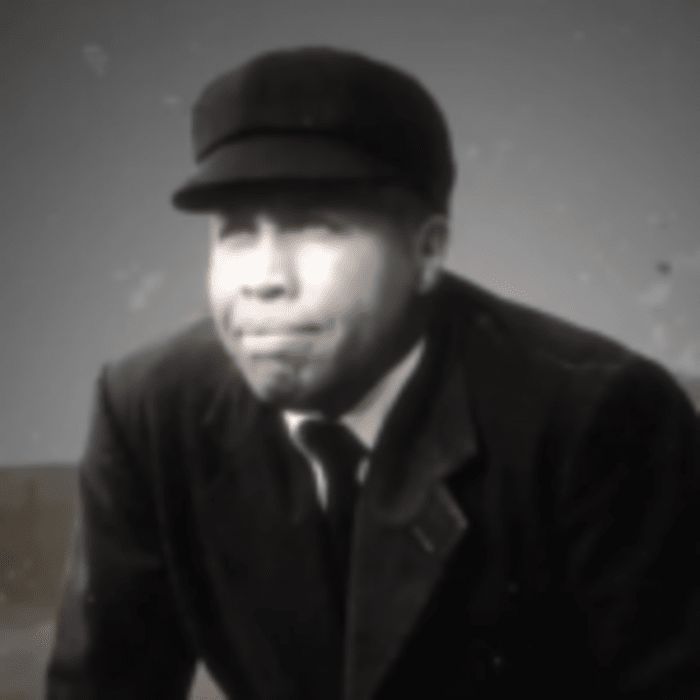
Something in it felt familiar to me — partly California, partly generational, partly the sound of Black men from my grandfather’s era who understood language as something you carried with you.
Jackie Robinson occasionally came to mind, not because Ashford and Robinson were the same man, but because of a certain California familiarity: educated Black men of the same broad era carrying themselves with the knowledge that demeanor could become part of somebody else’s argument about whether they belonged.
Ashford does not have to be reconstructed entirely through other people’s memories. He can enter. He can describe arriving in Washington and security refusing to believe he was one of the umpires. He can explain hearing about Jackie Robinson while in the Navy. He can tell you how he understood the craft.
The filmmakers do not have to give Emmett Ashford a voice. They have to know when to get out of the way of the one that survived.
Every good piece of material also creates another decision.
The historical record establishes that near the end of his Pacific Coast League run, Ashford enrolled in real-estate school and was close to walking away from baseball. Harris said he and Bell considered that material but could not find a way to carry it without spending too much time there.
So they left it out. That is documentary filmmaking too: not simply finding the story, but deciding what the story can carry.
Harris also came away with interpretations of the record.
Ashford was a genuine drawing attraction in the Pacific Coast League. Harris believes economics may help explain why he remained there so long.
“In a lot of the research that I’ve done,” Harris told me, “one of the things that I came up with — it didn’t have nothing to do with race; it had to do with money.”
His argument is that Ashford had become valuable at the gate and that selling his contract upward would have cost the Pacific Coast League a drawing card.
The drawing power is supported by the historical record. The causal theory is not established. That distinction matters. A filmmaker can follow an interpretation. A journalist should label it one.
Harris is a Berkeley-based filmmaker whose documentary and educational work focuses on preserving untold history across biography, sports, communities, politics and culture. His biography describes a nontraditional, character-driven approach and a body of PBS documentary work dealing with race in America.
Raymond Bell is an Emmy Award-winning executive producer with more than 35 years in television. A Berkeley native and UCLA graduate, his career has included KTLA, KTTV Fox 11 and KCBS, spanning sports, news, entertainment and community storytelling. He serves as executive producer of Called Up.
Bell graduated from Berkeley High in 1973. Harris followed in 1978.
Harris remembers watching Bell play basketball before the two eventually connected professionally. Bell describes Harris as something like a little brother. They describe hours on the phone between the Bay Area and Los Angeles, listening to material and figuring out how the pieces fit.
The project also has an intended educational afterlife.
Bell said he initially developed curriculum material for charter schools in Los Angeles before seeing an opportunity to align it with PBS LearningMedia. According to Bell, an educator with experience developing curriculum around Ken Burns documentaries was brought in to adapt the material to PBS requirements.
At the time of our interview, Bell said the curriculum was still being revised. He described it as intended for grades seven through 12, with social studies material, lesson plans and assignments that could include posters or podcasts.
Harris sees the educational component as consistent with where his filmmaking has increasingly moved.
“I kind of focus on education now,” he said. Bell sees the distinction in terms of shelf life. A broadcast agreement has an endpoint. Curriculum can keep moving. That seems fitting for a film built around preservation.
The film feels full because Harris and Bell found so much.
It matters because of everything time had already taken away.
The opinions expressed here are solely the author’s and do not reflect the opinions or beliefs of the Hollywood Progressive.
